
Martin County Court Records After Arrest
An arrest in Martin County starts as a jail and custody record. The Martin County Kologik roster can show booking charges, warrant numbers, arresting agency, days jailed, and bond. That is not the same thing as a court file. Court records after a jail arrest begin when a complaint, information, indictment, docket entry, or other filing is created in the court system. Felony cases are tied to the 118th Judicial District. Misdemeanor prosecution is handled through the Martin County Attorney's role described on the official county attorney page.
The booking side and the court side can differ. The jail card may list the charge used at intake, while the prosecutor may later file a different charge, add a count, reduce the charge, or dismiss it. For current custody details, use the Martin County jail inmate records page. For booking photos attached to roster cards, use the Martin County jail mugshots page. Court records after an arrest are about filed case activity, charge status, bond orders, settings, warrants, and final disposition.
Find Martin County Court Records
Martin County does not rely on one public page for every post-arrest court record. The research path uses several official channels. Start with the jail roster if the person may still be in custody. Then move to the Martin County County & District Clerk for filed case records, certified copies, and older court files. The county directory lists the County & District Clerk phone as 432-756-3412. Statewide electronic access may also be available through re:SearchTX, but access can depend on account type, document type, and participating court data.
The official iDocket eFile support list shows Martin County District Clerk, County Clerk, County Court, Justice of the Peace, and 118th District Court in the e-filing ecosystem. That does not mean every case document is free online. It does confirm the local court entities to look for when tracing a jail arrest into a court record. When a cause number is not known, use the defendant name, arrest date, charge, and arresting agency from the roster to help the clerk locate the file.
The re:SearchTX portal is a statewide access point for court case lookup in Texas.
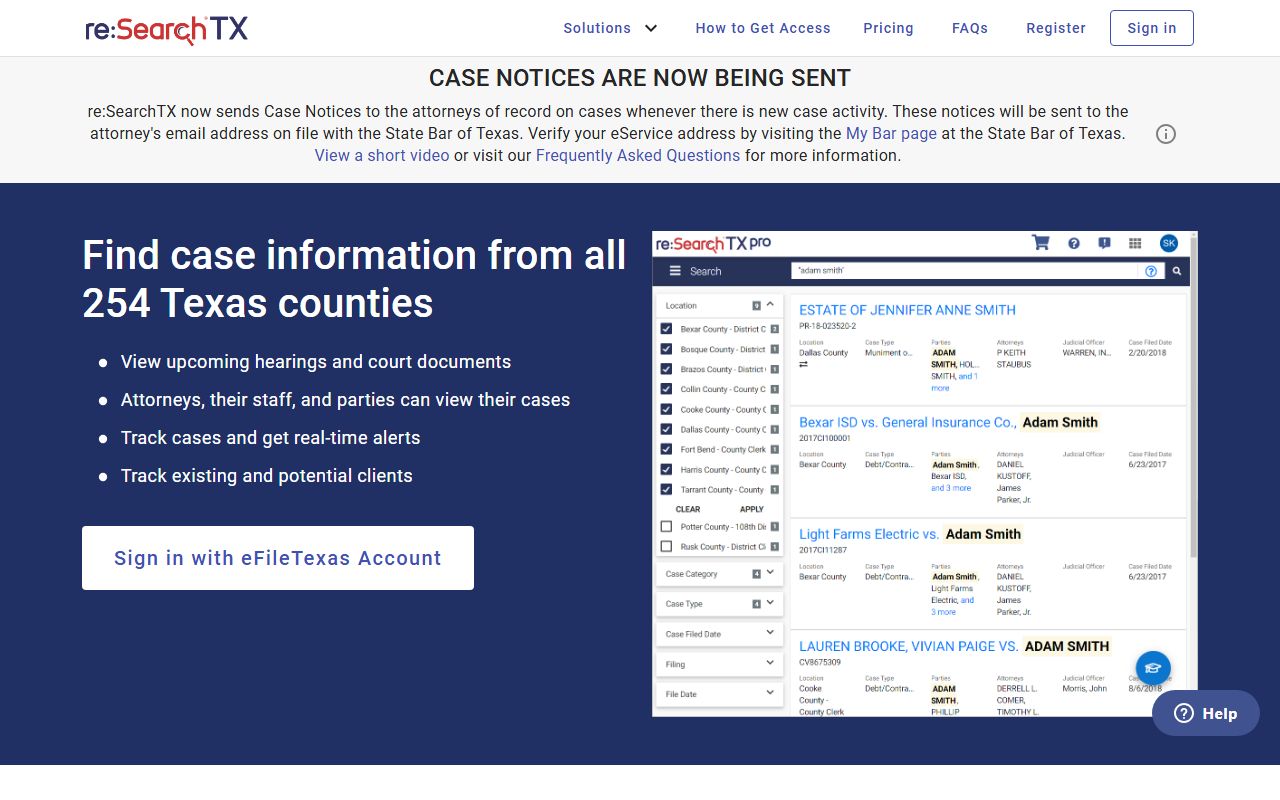
Use that court portal for filed case searching, then verify local certified records with the Martin County clerk when a document must be official.
- Check the Martin County roster for the person's name, arresting agency, booking charge, bond, and any warrant number.
- Search re:SearchTX or contact the County & District Clerk with the defendant name and date range.
- Look for the case number, court, charge list, filing date, bond entries, settings, and disposition.
- Compare each court charge with the jail booking charge before treating the record as final.
- Ask the clerk about certified copies when the record will be used in a formal setting.
Martin County Arrest Case Searches
Court records after a jail arrest are easier to find when the search uses the right identifiers. A roster card may not show a court cause number. It can still give the arrest date, booking date, arresting agency, charge text, charge code, bond, and warrant number. Those fields help bridge the gap between the jail roster and the court file.
| Search field | How it helps after arrest |
|---|---|
| Party name | Use the defendant name as booked, including middle name or suffix when shown. |
| Case or cause number | Best field once the clerk, court notice, bond paper, or docket gives the number. |
| Court or county filter | Use Martin County, 118th District Court, County Court, or Justice of the Peace when available. |
| Date range | Use the arrest or booking date from the roster to narrow a common-name search. |
| Account access | Some re:SearchTX documents may require login or may not be public to all users. |
The iDocket county support list is useful for confirming the court names tied to Martin County records.
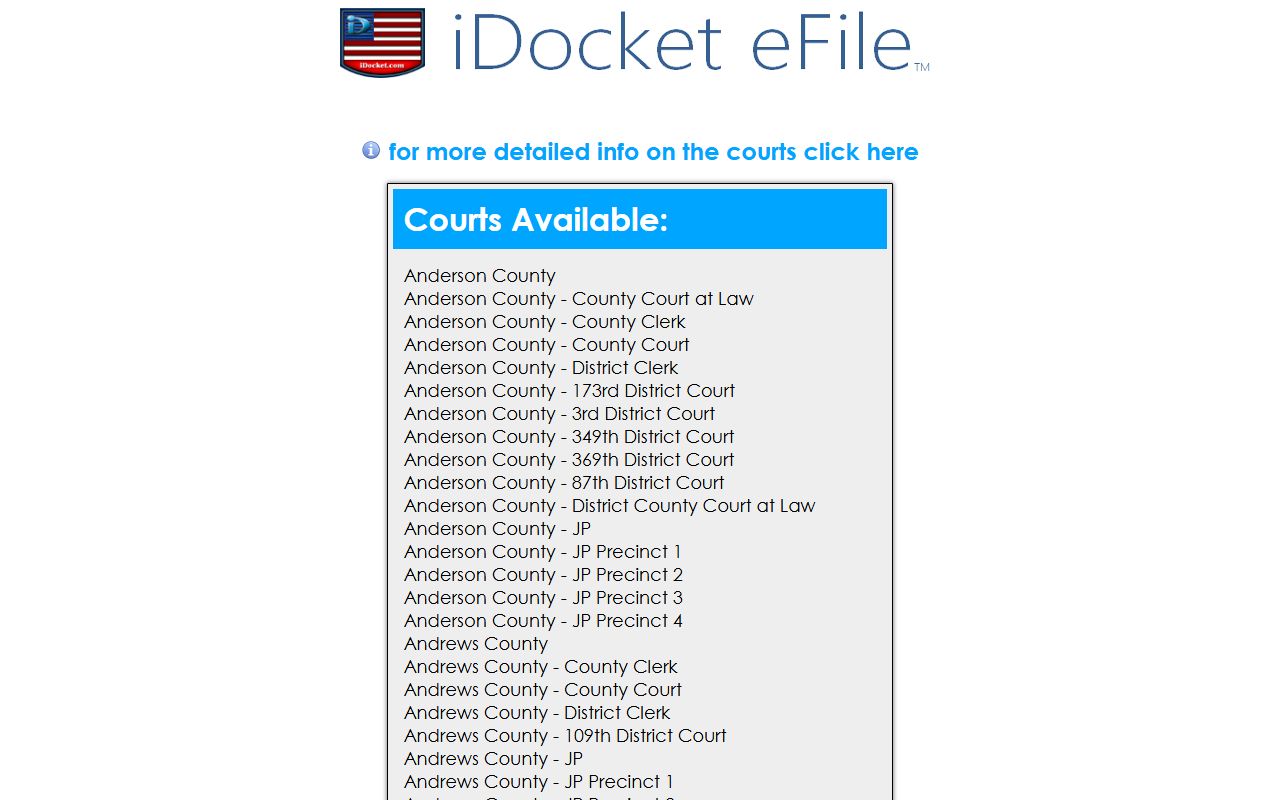
That source is not a custody roster, but it helps separate court filing channels from the sheriff's jail roster.
Charges Filed After Arrest
After a Martin County arrest, a case may begin with a complaint, information, indictment, or related court filing. The 118th District Attorney handles felony prosecution for the multi-county district that includes Martin County, Howard County, and Glasscock County. The official Martin County district attorney page lists Josh Hamby as District Attorney, with the office in Big Spring. The county attorney page states that the Martin County Attorney represents the state in misdemeanor criminal cases.
The jail roster is often first, but it is not the last word. A booking charge is an intake label. A charging document is the court accusation that the prosecutor or grand jury puts before the court. That is why court records after an arrest should be checked again after the first appearance, after prosecutor review, and after any indictment or plea setting.
| Document | Plain meaning | Martin County use |
|---|---|---|
| Complaint | A sworn allegation or charging paper that can begin a criminal matter. | May appear early in misdemeanor, warrant, or magistrate-level proceedings. |
| Information | A prosecutor-filed charging instrument, often used without a grand-jury indictment where allowed. | Commonly tied to prosecutor-filed misdemeanor or nonindictment records. |
| Indictment | A grand-jury charging instrument, usually used for felony prosecution. | Felony matters connect to the 118th Judicial District process. |
Martin County Charge Status
Court records after a jail arrest can change several times. A charge may be pending at first, then amended, reduced, dismissed, or resolved by plea or trial. The roster may still show the booking label from the time of intake, while the court file reflects the formal charge and the latest status. Treat the court file as the source for case outcome, and treat the jail roster as the source for current county custody.
| Status | Meaning in a court record |
|---|---|
| Pending | The charge or case is still active and has not reached a final disposition. |
| Amended | The charge text, count, allegation, or level changed after filing. |
| Reduced | The filed charge was lowered in grade or changed as part of prosecutor or court action. |
| Dismissed | The charge ended without a conviction on that count. |
| Conviction | The case reached guilt by plea, verdict, or other adjudication. |
Note: A dismissed charge may still appear in some records until the person obtains a sealing or expunction order.
Bond, Warrants, and Arrest Records
Martin County's Kologik roster displays bond by charge. The app renders a zero-dollar amount as "No Bond." Sample records inspected in the research included bonds in several amounts, but those examples are not a fee schedule. A person may also have a parole hold, another-county warrant, federal issue, ICE matter, or court order that blocks release even when one listed charge has a bond amount.
No official Martin County active-warrant search page was located. The roster can show warrant numbers after a person is booked, but it is not a forward-looking warrant database for people who are not in custody. For warrant-related court records after an arrest, contact the sheriff or jail at 432-756-3336 for custody status, the County & District Clerk at 432-756-3412 for filed case information, and the Justice of the Peace at 432-756-3445 for JP-level matters when applicable.
| Issue | Where to start | What to confirm |
|---|---|---|
| Cash or surety bond | Jail or issuing court | Amount, bond type, payment place, and release eligibility. |
| No-bond hold | Jail and court | Whether the hold is local, state, parole, federal, or another county. |
| Warrant number | Roster, clerk, or issuing court | Whether the warrant has been executed and tied to a filed case. |
| Stanton Police arrest | Stanton Police or Martin County jail | Police report access and current county jail custody. |
Charges, Convictions, Sealing, Expunction
A charge is not a conviction. This distinction matters in Martin County court records after an arrest because an arrest can lead to dismissal, reduction, deferred action, plea, trial, or no filed case at all. A conviction is a final or adjudicated outcome. A charge is an accusation or filed count that must still move through the legal process.
| Record point | Charge | Conviction |
|---|---|---|
| Stage | Accusation after arrest or prosecutor filing. | Result after plea, verdict, or adjudication. |
| Proof level | Based on arrest, complaint, probable cause, or filing decision. | Based on a court outcome under criminal-case standards. |
| What to check | Charge code, count, bond, warrant, and pending status. | Disposition, sentence, probation, fine, or dismissal of other counts. |
Texas law also separates sealing from expunction. Texas Code of Criminal Procedure Chapter 55 is the expunction path cited in the research. Expunction can remove eligible arrest records from public access. Sealing or nondisclosure limits public visibility but does not always destroy the record.
| Record action | Plain effect | Practical note |
|---|---|---|
| Sealed or nondisclosed | Public access is limited, but certain agencies may retain access. | Eligibility depends on the court order and case result. |
| Expunged | Eligible arrest records are removed or treated as not existing for many public uses. | Use the court order with the agency or custodian that holds the record. |
| Not cleared | The arrest, charge, or case may remain visible where public law allows. | Verify status with the clerk, court, and originating agency. |
Public Access Limits in Martin County
Texas Government Code Chapter 552, the Texas Public Information Act, is the general public-records law for government records. Texas Code of Criminal Procedure Article 15.26 requires certain warrant and arrest information, such as the arrested person's name and offense charged, to be made public after a warrant is executed. Those laws do not make every juvenile record, active investigation file, sealed case, expunged record, or confidential detail public.
Texas DPS criminal-history products are separate from Martin County jail and court records. They should not be treated as the same thing as a local court lookup. For employment, housing, credit, insurance, or tenant-screening decisions, use a legally compliant consumer-reporting process rather than informal roster or docket searches.
Important: Do not use informal jail, court, or roster lookups for FCRA-covered screening decisions.
Public Record Search
Sponsored Results